
How to Remove Car Interior Stains (and Why Timing Matters)
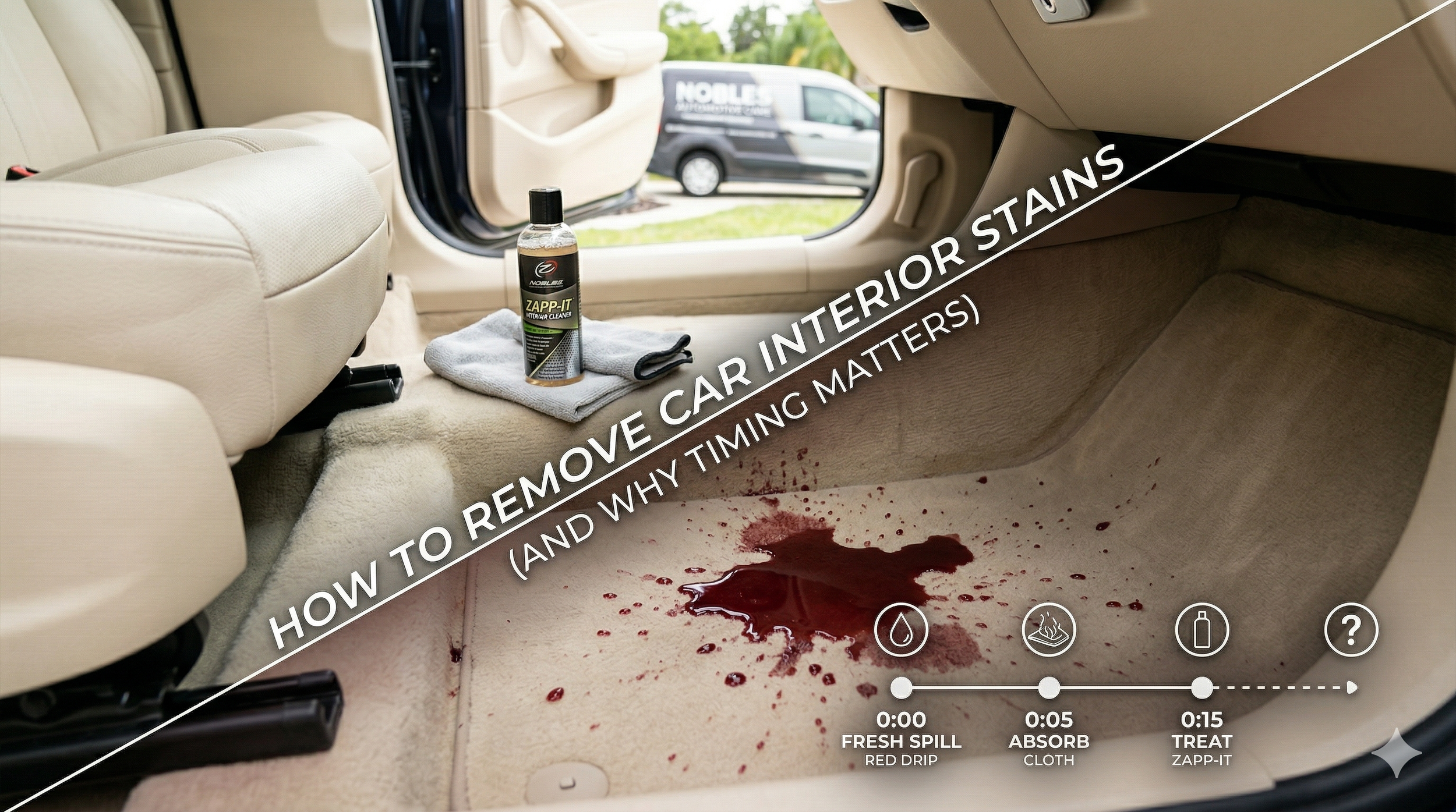
If there’s one rule I always tell customers when it comes to stains, it’s this: the faster you clean it, the better your chances of getting it out completely.
As a mobile auto detailing professional, I’ve seen stains come out easily—and I’ve seen the same stains become permanent just because they sat too long. Whether it’s on your seats, carpet, or headliner, timing and technique make all the difference.
Why You Should Clean Stains Immediately
When a spill or stain first happens, it’s still sitting on the surface. The longer it sits:
It soaks deeper into the material
It bonds with fibers
It becomes harder (sometimes impossible) to fully remove
Quick action can mean the difference between a simple wipe and a full extraction process.
How to Clean Headliner Stains (Proceed Carefully)
Headliners are one of the most delicate parts of your interior.
Here’s what makes them tricky:
The material is thin and lightly bonded
Too much agitation can damage or pull the fibers
Over-wetting can cause sagging
Safe Approach:
Do not aggressively scrub
Apply a cleaner (I use Zapp-It from Superior Products) to a microfiber towel
Lightly blot and gently work the area
That’s really all you want to do. Less is more with headliners—pushing too far can make it look worse than the stain itself.
How to Clean Seat Stains
Seats give you a little more flexibility, depending on how deep the stain is.
Step 1: Light Cleaning
Start with:
A quality interior cleaner (like Zapp-It)
A microfiber towel
Light agitation
Sometimes that’s all you need if the stain is fresh.
Step 2: Deep Cleaning (Shampoo + Extraction)
If the stain doesn’t come out, you’ll need a more thorough process.
Here’s what I do:
Mix an interior cleaner (I use Zep) at about a 5:1 water-to-product ratio
Spray the affected area
Use a drill brush to agitate and loosen the stain
Extract the area to pull out moisture and debris
This method gets deep into the fibers and removes what basic cleaning can’t.
Important: Drying After Deep Cleaning
After extraction, the seats will still be slightly damp. Proper drying is key.
What I recommend:
Crack the windows slightly to allow airflow
Let the interior breathe and dry naturally
You can also use moisture-absorbing bags (like the ones sold at Walmart) to help pull humidity out of the air
This helps prevent odors and ensures a clean finish.
Practical Tips for Better Results
Blot spills immediately—don’t rub them in
Always test cleaners in a small area first
Avoid over-saturating delicate materials
Use the least aggressive method before stepping up
Final Thoughts from Nobles Automotive Care
Not every stain is the same, and not every surface should be treated the same way. The key is acting quickly and using the right process for the material you’re working with.
If a stain has been sitting for a while or you want it handled the right way the first time, professional equipment and technique can make a big difference.
Nobles Automotive Care provides expert mobile auto detailing, including interior stain removal and deep cleaning services—right at your home or workplace.
📞 Call or text: 904-510-6628
🌐 Visit: noblesautomotivecare.com
If you’ve got a tough stain, reach out and I’ll help get it looking as close to new as possible.