
How to Properly Clean Wheels and Tires (Without Damaging Them)
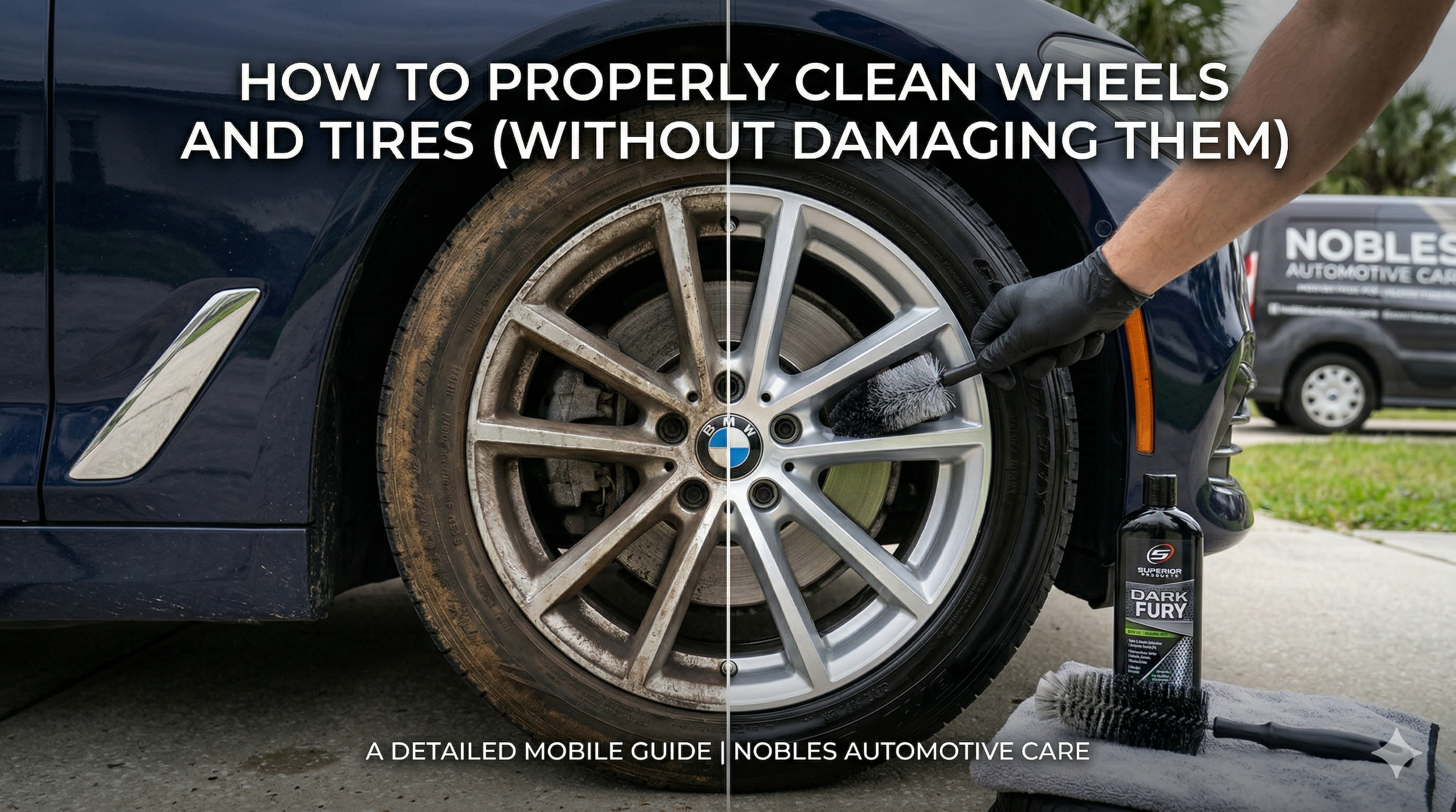
If you’ve ever tried scrubbing your wheels and tires with just soap and water, you already know—it doesn’t work very well. Brake dust, road grime, and built-up residue bond to the surface, making them one of the toughest parts of your vehicle to clean.
As a mobile auto detailing professional, I deal with this daily. The key isn’t scrubbing harder—it’s using the right process and products to break that grime down safely.
Why Wheels and Tires Are So Hard to Clean
Your wheels take more abuse than almost any other part of your vehicle. Every time you drive, they’re exposed to:
Brake dust (which can be corrosive)
Road grime and oils
Dirt, sand, and debris
Heat from braking
Over time, this buildup sticks to the surface and won’t come off with basic soap alone.
Step 1: Pre-Treat the Wheels and Tires
The biggest mistake I see is skipping the pre-treatment step. This is what actually loosens the grime so you’re not fighting it.
My Go-To: pH-Neutral Pre-Treatment
One of my personal favorites is Dark Fury by Superior Products. It’s a pH-neutral cleaner, which means:
It’s safe on wheels, tires, and surrounding surfaces
It won’t damage your clear coat
It can even be diluted and used on your paint to help loosen dirt
Spray it on, let it dwell briefly, and you’ll notice the grime start to break down.
Step 2: When to Use Stronger (Acid-Based) Cleaners
For heavily neglected wheels, sometimes a stronger cleaner is needed.
Acid-based wheel cleaners can:
Break down stubborn brake dust quickly
Restore heavily soiled wheels
But you need to be careful:
Always dilute properly
Avoid letting it sit too long
Don’t use on damaged or sensitive finishes
Important Tip:
After using an acidic cleaner, I always recommend following up with a pH-neutral product (like Dark Fury) to help neutralize the surface and keep it safe.
Step 3: Agitate the Surface Properly
Once your cleaner has had time to work:
Use a dedicated wheel brush for the rims
Use a stiff brush for tires to remove browning and buildup
Get into crevices, spokes, and lug areas
You’ll notice that with proper pre-treatment, the grime comes off much easier—no aggressive scrubbing needed.
Step 4: Rinse Thoroughly
Make sure all product is completely rinsed off:
Leftover cleaner can stain or damage surfaces
Pay attention to tight areas where chemicals can sit
A strong rinse is just as important as the cleaning step.
Pro Tips for Better Results
Clean your wheels before washing the rest of your car
Don’t let cleaners dry on the surface
Use separate tools for wheels and paint to avoid contamination
Regular cleaning prevents heavy buildup and makes maintenance easier
Final Thoughts from Nobles Automotive Care
Wheels and tires are one of the most noticeable parts of your vehicle, but also one of the easiest to get wrong if you’re using the wrong approach.
The right combination of pre-treatment, proper cleaners, and technique makes all the difference—not just in how your wheels look, but in how well they hold up over time.
If you’d rather have it done professionally, I’ve got you covered.
Nobles Automotive Care offers expert mobile auto detailing, including deep wheel and tire cleaning, all done at your home or workplace.
📞 Call or text: 904-510-6628
🌐 Visit: noblesautomotivecare.com
Reach out anytime, and I’ll make sure your wheels and tires are cleaned the right way.